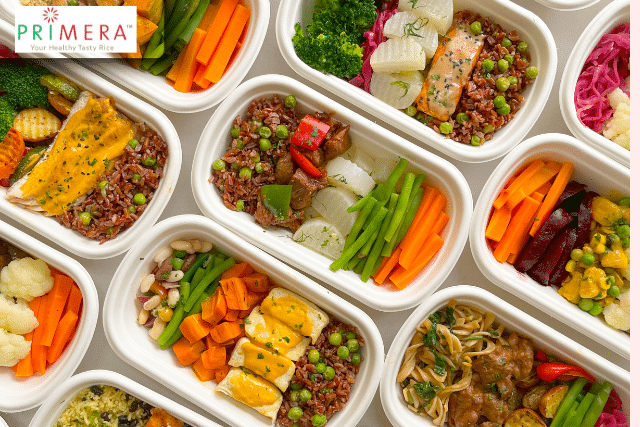
Healthy French Style Fried Rice
January 20, 2020
9 Factors that Determine the Glycaemic Response to Carbohydrates – #2
January 20, 2020

Article in 3 languages | Artikel dalam 3 bahasa | 3语短文
1 minute read | 1 minit baca | 1分钟阅读
9 Factors that Determine the Glycaemic Response to Carbohydrates – #1
For many years it was assumed that the response was based on the chemical composition, eg, sugars versus starches. It was thought that starches were slowly digested and absorbed, causing a small increase blood glucose levels, while sugars (glucose, sucrose, fructose, lactose) were readily digested and absorbed, leading to high blood glucose levels. This was proven as incorrect due to discovery of certain factors.
#1 – Food Form
The physical form of food affects the rate of absorption leading to the subsequent rise in glucose. The reason is a significant increase in glucose response and insulin secretion. For example, food blended mechanically has faster absorption rate leading to faster rises in glucose compared to that by hand.
9 Faktor yang Menentukan Gerak Balas Glisemik kepada Karbohidrat – #1
Untuk sekian lamanya, gerak balas glisemik adalah berasaskan kepada reaksi kimia yang berasaskan kepada komposisi kandungan kimianya, sebagai contoh, perbandingan antara gula dengan kanji. Adalah menjadi anggapan biasa pencernaan dan penyerapan kanji berlaku dengan lebih perlahan, kadar peningkatan gula darah adalah lebih rendah berbanding dengan gula (glukosa, sukrosa, fruktosa, laktosa) yang lebih mudah mudah dicerna dan diserap, membawa kepada kadar gula darah yang tinggi. Anggapan sedemikian sebenarnya adalah tidak tepat, berdasarkan kepada beberapa penemuan terkini.
#1 – Bentuk Makanan
Bentuk fizikal makanan mempengaruhi kadar penyerapan makanan yang membawa kepada pertambahan kandungan glukosa. Sebabnya adalah peningkatan yang signifikan dalam tindak balas glukosa dan rembesan insulin. Sebagai contoh, makanan yang dicincang secara mekanikal mempunyai kadar penyerapan yang lebih cepat dan membawa kepada peningkatan kadar glukosa lebih tinggi berbanding yang dicincang menggunakan tangan.
决定血糖对碳水化合物反应的9大因素 – #1
多年来,人们一直都认为此反应是基于化学成分,例如糖或淀粉。认为淀粉引导小幅度的血糖水平增加是因为淀粉缓慢消化和吸收,而糖(葡萄糖,蔗糖,果糖,乳糖)易于消化和吸收,所以导致血糖水平升高。但是,由于发现了某些因素,这已经被证实是不正确了。
#1 – 食物的形状
食物的形状会影响吸收速率,从而导致饮食后的葡萄糖升高。原因是葡萄糖反应和胰岛素分泌的显着增加。例如,与手工混合的食物相比,机械混合的食物的吸收速度更快,从而导致葡萄糖的更快升高。
Other Factor | Faktor Lain | 其他因素
#1 – Food Form | Bentuk Makanan | 食物的形状 . #2 – Digestibility | Tahap Pencernaan | 消化率 . #3 – Cooking | Memasak | 烹煮 . #4 – Type of Sugar | Jenis Gula | 糖的种类 . #5 – Type of Starch | Jenis Kanji | 淀粉的种类 . #6 – Presence of Anti-nutrients | Kehadiran Anti-nutrien | 抗营养(Anti-nutrients)成分的存在 . #7 – Second Meal or Lente Effect | Kesan Makanan Hidangan Kedua atau “Lente Effect” | 第二餐或缓和效果 . #8 – Glucose Tolerance Effect | Kesan Toleransi Glukosa | 葡萄糖耐量效应 . #9 – Pre-meal Glucose | Glukosa Pra-makan | 餐前血糖