By Dr Woo Tai Kwan
I did my medical test recently. To my horror, I found my blood sugar to be high, in the pre-diabetic range. Probably the effect of all the festive binges that started with Deepavali and Christmas last year right onto the Lunar New Year.
Anyway, this got me thinking on how to bring my blood sugar level down. I asked my friends (some of whom are self-acclaimed health gurus) and the keywords bandied around were “exercise” and “food”. I am an avid walker, so exercise is not a problem but food… now, that is a different matter altogether. I enjoy eating. It seems there is a whole list of food to avoid, from cakes and pies to all my favourite desserts. Not only that – they say I must also control my rice intake.
A serious problem, indeed. Like most Asians, I love my rice. Rice is the staple food for more than half the world’s population and I definitely fall into that half. In fact, there was a time when I ate rice morning, afternoon and night. So, how do I stay healthy and still get my daily fix of rice without guilt?
To cut a long story short, that is how I started upon my journey to research on rice.
Do you know that there are thousands of types of rice? White rice, brown rice (with all its red, purple and black varieties). Irrespective of the colour, all rice types are rich in carbohydrates but some can lead to quick spikes in blood sugar levels if we are not careful.
I used to like sticky white rice cos it is tastes good and is easy to pick up with chopsticks. But my research suggests that white rice is not as healthy as brown rice. White rice has been refined and hence stripped of its bran and germ. While this may enhance its shelf life and taste, it also reduces its nutritional value.
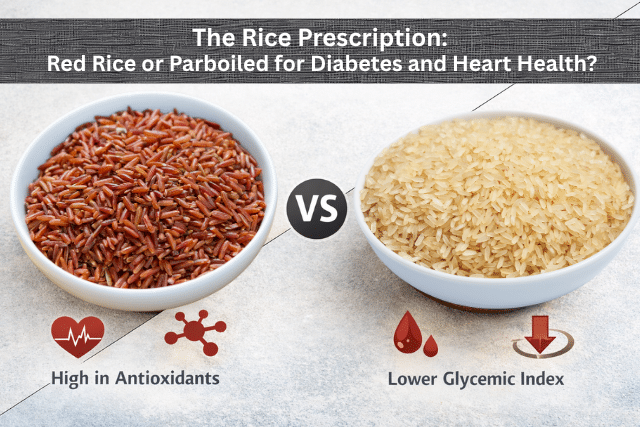
Red rice has its whole grain (bran and germ) intact, and is thus much richer in fibre, vitamins, minerals and antioxidants. This means it can help to reduce weight and cholesterol levels because bran is a good source of lignans and ferulic acid. According to medicalnewstoday.com, lignans are linked to reduced heart disease, menopausal symptoms, osteoporosis and breast cancer. Ferulic acid has anti-inflammatory and antimicrobial effects and helps to prevent cancer and diabetes.
All these are good enough reasons for me to switch to red rice.
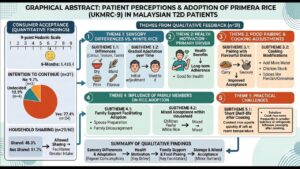
At first, I mixed white rice with red. But now, I take mainly red rice – Primera Rice. A close friend, who is also a nutritionist at a leading hospital, recommended Primera to me, citing its low GI (Glycemic Index) of 46 that helps to lower after-meal blood sugar levels as exactly what my doctor ordered. She also explained that Primera rice, if consumed regularly, protects our cells from free radicals as it is rich in antioxidants. Not only that, but the high phenolic content in Primera rice also enhances our body’s anti-inflammation capacity.
That got me sold. More importantly, I tried Primera and liked its slightly nutty flavour. Plus, the rice is soft and makes me feel full fast (due to the high fibre content). It also helps that it is readily available, offline (just check out the leading supermarkets) and online (via Shopee and Lazada).
Ever since I tried Primera red rice, I have not looked back. There is a saying: “We are what we eat.” So, if we wish to be healthy, then we need to eat healthy. And ever since I tried Primera rice, I feel healthier. So, I will continue to eat Primera Rice to stay healthy.
Zinc, a nutrient found throughout your body, helps your immune system and metabolism function. Zinc is also important to wound healing and your sense of taste and smell. With a varied diet, your body usually gets enough zinc. The value of zinc is 2.8mg/100g.
Rich in fiber and resistant starch to support a healthier digestive system from the inside out. It helps nourish beneficial gut bacteria, promotes smoother digestion, improves regularity, and keeps you feeling fuller for longer. A healthier gut also contributes to better overall wellness, immunity, and everyday vitality.
Antioxidants are substances that may protect your cells from free radicals, which may play a role in heart disease, cancer, and other diseases. Free radicals are molecules that are produced when your body breaks down food or when you are exposed to tobacco smoke or radiation.
Primera® Red Rice, known as UKMRC9, has a low glycaemic index value (41-48%) which helps to lower and stabilize your after-meal blood glucose level.
Low-GI foods have a GI score of less than 55. They contain carbohydrates that take longer for the body to digest than high-GI foods.
Low-GI foods cause blood sugar levels to rise more slowly than moderate- or high-GI foods.
| Item | Remarks |
| Certificate of Analysis (CoA) | Available upon request |
| Clinical Validation in Type 2 Diabetes Patients | 24-week clinical study completed |
| Low Glycaemic Index (GI 46) | Scientifically Proven |
| High Antioxidant | Natural anthocyanin |
| High Resistant Starch | Laboratory Tested |
| Single Variety Paddy | New Plant Variety (NPV) |

Please click the button below to download our latest brochure.
[Download] Official Primera Brochure
[Download] Primera Rice Cooking Guideline
[Download] Primera Rice Quick Facts
Thank you for your interest in Primera.