By Joseph Masilamany
*“The writer of this article was honoured by the Malaysian Ministry of Health in 2007 as the nation’s Top Medical Journalist.”*
Rice may look deceptively simple on the plate, but nutritionally, not all rice behaves the same in the body. In clinical diet applications, particularly for patients managing diabetes, cardiovascular disease, or metabolic syndrome the type of rice consumed can significantly influence glycaemic control and long-term outcomes.
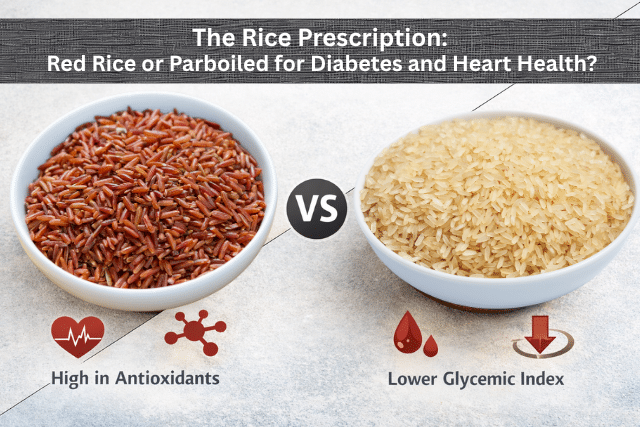
Two options increasingly discussed in dietetic circles are Homegrown Primera Red Rice and parboiled rice (also known as Nasi India in Malaysia). While both are often positioned as healthier alternatives to polished white rice, their metabolic profiles and functional benefits differ in important ways.
Understanding these differences is essential for clinicians, dietitians, and patients navigating therapeutic carbohydrate choices.
Parboiled rice (also known as converted rice) undergoes a hydrothermal process before milling. The paddy is soaked, steamed, and dried before the husk and bran are removed. This process causes nutrients from the bran to migrate into the endosperm, giving parboiled rice a firmer texture and slightly yellow hue.
Nutritionally, parboiled rice:
Because of its lower glycaemic impact relative to white rice, parboiled rice is sometimes recommended in diabetic meal planning.
However, parboiled rice is not automatically classified as low GI. Its glycaemic index typically falls in the medium range, depending on the specific variety and cooking method.
Homegrown Primera Red Rice is a whole grain red rice variety characterised by its intact bran layer, higher amylose content, and naturally occurring phytonutrients such as anthocyanins.
Unlike parboiled rice, it is not processed to redistribute nutrients. Instead, it retains its full grain structure, including:
Its defining feature in clinical nutrition is its lower glycaemic index, placing it within the low GI category when properly prepared. This distinction is not cosmetic it directly influences metabolic response.
In therapeutic nutrition, the most significant comparison between Homegrown Primera Red Rice and parboiled rice lies in glycaemic behaviour.
Parboiled Rice
The parboiling process alters starch structure, resulting in:
This makes parboiled rice superior to white rice in glycaemic terms. It produces a slower rise in blood glucose and is often better tolerated by individuals with mild insulin resistance.
However, it generally remains a medium GI carbohydrate.
Homegrown Primera Red Rice
Red rice varieties like Homegrown Primera tend to contain:
Higher amylose content slows enzymatic digestion, resulting in a more gradual release of glucose into the bloodstream. Resistant starch escapes digestion in the small intestine and undergoes fermentation in the colon, improving insulin sensitivity.
For patients with Type 2 diabetes or metabolic syndrome, the lower glycaemic impact of red rice may translate into:
In clinical settings where precise glucose control is necessary, this difference becomes meaningful.
Another important distinction lies in micronutrient and antioxidant content.
Parboiled Rice
Because nutrients migrate inward during processing, parboiled rice retains:
However, it does not retain the full antioxidant profile of intact pigmented grains.
Homegrown Primera Red Rice
The red bran layer contains anthocyanins and polyphenols plant compounds known for:
Oxidative stress and chronic low-grade inflammation are central drivers of diabetes and heart disease. A rice variety that contributes antioxidant support may therefore offer added value in preventive cardiometabolic care.
Thus, beyond glycaemic index alone, red rice offers functional nutritional advantages.
Satiety is influenced not only by fibre content but by glycaemic stability.
Parboiled rice provides improved texture and slower digestion compared to white rice. It can promote moderate fullness and reduced glycaemic fluctuation.
However, the higher fibre and resistant starch content in red rice may enhance satiety more effectively. Stable glucose release reduces reactive hunger and may support weight management strategies in obesity clinics.
For patients struggling with portion control, even modest improvements in satiety can influence long term success.
One advantage of parboiled rice is its lighter texture and easier digestibility compared to many whole grain varieties. Some patients transitioning from white rice find parboiled rice more acceptable in taste and mouthfeel.
Red rice, including Homegrown Primera Rice, has a firmer texture and nuttier flavour. While nutritionally advantageous, it may require longer cooking time and patient education to ensure proper preparation.
In clinical practice, dietary adherence matters. The “best” rice nutritionally is ineffective if patients do not consume it consistently.
Chronic hyperglycaemia contributes to endothelial dysfunction and vascular inflammation. While both parboiled and red rice are superior to white rice, red rice may offer dual benefits:
For patients with established cardiovascular disease or high-risk profiles, this combination may be advantageous.
However, it is important to emphasise that rice choice is only one element of comprehensive cardiac nutrition. Total dietary pattern, fat quality, sodium intake and physical activity remain critical.
In rice dependent societies like Malaysia, recommending the complete elimination of rice is unrealistic. The more practical strategy is substitution.
Parboiled rice often serves as a transitional option for individuals moving away from polished white rice. It offers improved glycaemic performance without a drastic sensory change.
Homegrown Primera Red Rice may represent the next step, particularly for patients requiring tighter metabolic control.
For general populations without metabolic disease, parboiled rice may provide sufficient improvement. For high risk or diagnosed patients, red rice may offer enhanced therapeutic value.
Parboiled Rice May Be Suitable For:
Homegrown Primera Red Rice May Be Preferable For:
The difference is not dramatic in appearance, but metabolically, it can be significant.
The comparison between Homegrown Primera Red Rice and parboiled rice reflects a broader shift in nutritional thinking. The question is no longer whether rice can be part of a healthy diet but which rice best supports metabolic health.
Parboiled rice represents an improvement over polished white rice, offering moderate glycaemic benefits and retained nutrients.
Homegrown Primera Red Rice goes further, combining whole-grain integrity, lower glycaemic impact, resistant starch, and antioxidant phytonutrients. In clinical diet planning, these differences matter.
Rice is not a uniform carbohydrate. Its structure determines its function.
And in an age of rising metabolic disease, choosing the right grain may be one of the simplest yet most powerful dietary interventions available.
Support healthier lifestyles with nutrient-rich rice. Contact Primera Rice today to learn more about our premium red rice solutions. >>>Primera Team<<<

Please click the button below to download our latest brochure.
[Download] Official Primera Brochure
[Download] Primera Rice Cooking Guideline
[Download] Primera Rice Quick Facts
Thank you for your interest in Primera.